

My experience at the "Breaking the News? Global Perspectives on the Future of Journalism in the Age of AI" conference
The year began with an important conversation about the future of journalism in the age of AI, one that has stayed with me and continues to shape how I think about platform power and information ecosystems several months later. I had the opportunity to represent the Competition Commission South Africa at the “Breaking the News? Global Perspectives on the Future of Journalism in the Age of AI” conference hosted by DW Akademie in Berlin, Germany. The event brought together policymakers, journalists, technologists and civil society actors from across the world to engage with a central question: what will it take to sustain journalism in an AI shaped information ecosystem?
The Berlin convening marked the culmination of a broader global dialogue held across five regions, where stakeholders reflected on both the risks and the opportunities presented by artificial intelligence. What stood out was that the conversation did not end at diagnosing disruption. There was a clear shift towards thinking about solutions and what a more sustainable future for journalism could look like in practice. As part of this engagement, I contributed to the panel on Policy in practice: Information integrity as an international matter, which explored how public policy can respond to increasingly complex and fast evolving information environments.

One of the clearest takeaways from the conference is that digital platforms can no longer be viewed as neutral intermediaries. Discussions on themes such as fair play, fair pay, as well as AI driven search and content aggregation, made it clear that platforms actively shape the information ecosystem. Through algorithms, ranking systems and monetization models, they influence not only what information people see, but also how value is shared within the news economy. For news organizations, this represents a significant shift. They are no longer just producing content, they are operating within platform governed markets where the rules are largely set by others. This naturally brings the issue of platform power into sharper focus. Across discussions on platform dominance, there was broad agreement that large technology firms benefit from scale, data advantages and network effects that reinforce their position in the digital economy. In the context of journalism, this often creates an imbalance between those who produce content and those who capture most of the value generated from it.
South Africa’s experience offers a useful example of how these challenges can be addressed in practice. Through the Media and Digital Platforms Market Inquiry, the Competition Commission examined the relationship between digital platforms and news publishers, with a focus on how value is distributed in the digital ecosystem. One of the key outcomes has been a commitment by Google to contribute approximately 688 million Rands as part of a broader set of measures aimed at supporting and strengthening the sustainability of South African news media. This is an important step. It signals recognition that platforms have a responsibility to contribute to a more balanced and sustainable news ecosystem.
These dynamics are not only economic. They have broader implications for media plurality, access to information and the health of democratic discourse. Limited transparency in how content is ranked or monetised, together with information asymmetries between platforms and publishers, continues to make it difficult for news organisations to compete on fair terms.
At the same time, the conference made it clear that we are dealing with something bigger than isolated market challenges. There is a broader structural shift underway, what many participants described as a reset of the information economy. The message in a bottle session captured this well, bringing together perspectives from different regions that reflected both uncertainty and optimism. While concerns about sustainability were prominent, there was also a strong sense of innovation and emerging solutions, particularly from the Global South.
From a policy perspective, the conversation has clearly moved forward. The question is no longer whether intervention is needed, but how it should be designed. Discussions emphasized the importance of recognizing information as a public good, while still allowing space for innovation and market development. Getting this balance right will be critical.
Another important takeaway is that traditional regulatory silos are no longer adequate. The issues at play cut across competition policy, media regulation and digital governance. Addressing them effectively will require more coordinated and integrated approaches that reflect how interconnected modern information ecosystems have become.
Beyond these structural issues, the conference also highlighted a set of interconnected challenges. Trust in information systems is under pressure, particularly with the rise of AI generated content and changing patterns of news consumption. At the same time, the financial sustainability of journalism remains a concern, with many traditional models struggling to adapt. These challenges are often compounded by fragmented policy responses that do not fully match the scale of the problem.

The world café sessions brought this into sharp focus. By creating space for open exchange between policymakers, practitioners and innovators, they highlighted the value of collaboration in tackling these issues. While the contexts may differ, many of the underlying challenges are shared. Reflecting on these discussions, a few priorities stand out. There is a clear need to ensure a more balanced distribution of value within the digital news ecosystem, particularly in addressing bargaining imbalances between platforms and publishers. Transparency and accountability in how platforms operate will also be critical in building trust. Equally important is the need for more coordinated policy frameworks that bring together competition, media and digital regulation. Recognising journalism as a public good also means thinking more deliberately about how it is supported, whether through funding models, innovation support or institutional strengthening. At the same time, continued collaboration between regulators, media organisations, technology firms and civil society will be essential.
Ultimately, what the Berlin discussions reinforced is that the future of journalism will not be shaped by technology alone, but by how we choose to respond to it. AI and digital platforms are already reshaping the information economy. The challenge now is to ensure that this transformation leads to a more equitable, sustainable and trustworthy information ecosystem.
Panelists (L-R):
Martin Wimmer, Chief Digital Officer, Federal Ministry for Economic Cooperation & Development (BMZ), Germany.
Winnifred Mahama, Acting Director of the Information Services Department, Ghana.
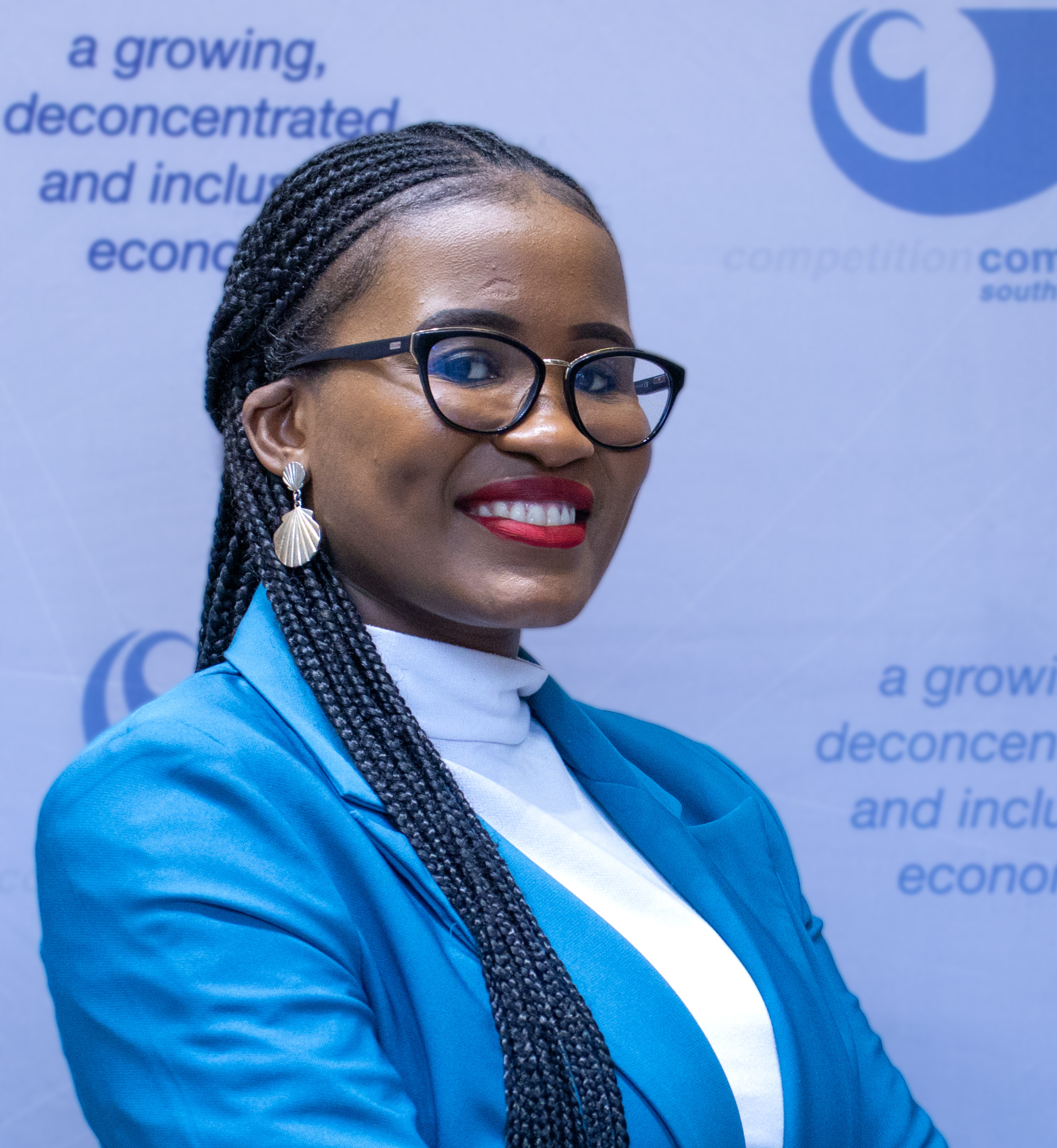
Phathutshedzo Manenzhe, Senior Analyst, Competition Commission, South Africa.
Michelle Iliev, State Secretary for Digitalization & Innovation, Ministry of Economic Development and Digitalization, Moldova.
(Virtually) João Brant, Secretary of Digital Policies, Secretariat of Social Communication of the Republic of Brazil
In the middle is the moderator, Liz Shoo.
Author's Bio

Phathutshedzo Manenzhe is a competition regulation specialist from South Africa. She currently holds the position of a senior analyst at the Competition Commission of South Africa. She has over 9 years of experience, working on complex abuse of dominance investigations in the mining industry and banking sector, market inquiries in the digital markets, and mergers in the manufacturing industry. Ms. Manenzhe has also contributed to policy-oriented research on competition enforcement and is currently engaged in work examining regulatory approaches to digital platforms. She holds a master’s degree in economics and is a published researcher in international journals. Her current interest lies in competition regulation of digital markets and emerging technologies..
Comments